
Implicit
Salzburg 2017
Linear Examples 1-6 and Nonlinear Examples 1-3 from "A Roadmap to Linear an Nonlinear Implicit Analysis in LS-DYNA" by George Laird and Satish Pathy.
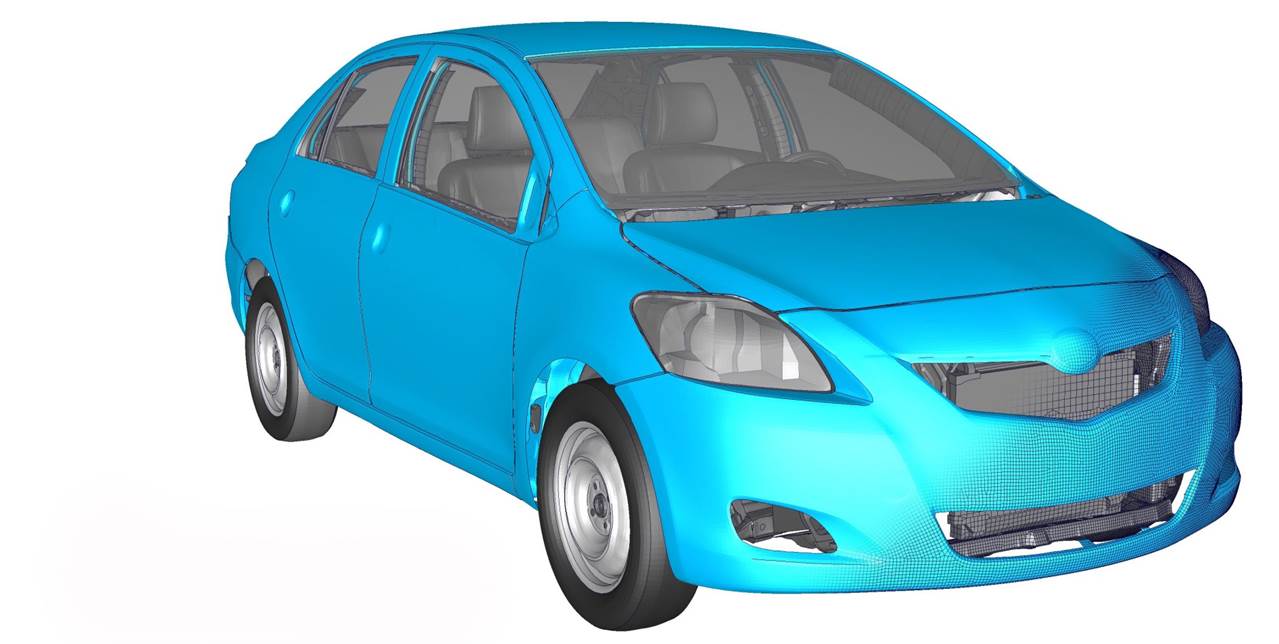
Yaris Static Suspension System Loading
This example shows the static loading of the TOYOTA Yaris suspension system. The car model is based on the CCSA (former NCAC) TOYOTA Yaris. The author's aim is to do as less modifications as needed to make the model 'implicit ready'. This model was computed successfully with the LS-DYNA R9.0.1 MPP implicit static solver. Last but not least we want to acknowledge the CCSA for the baseline model.
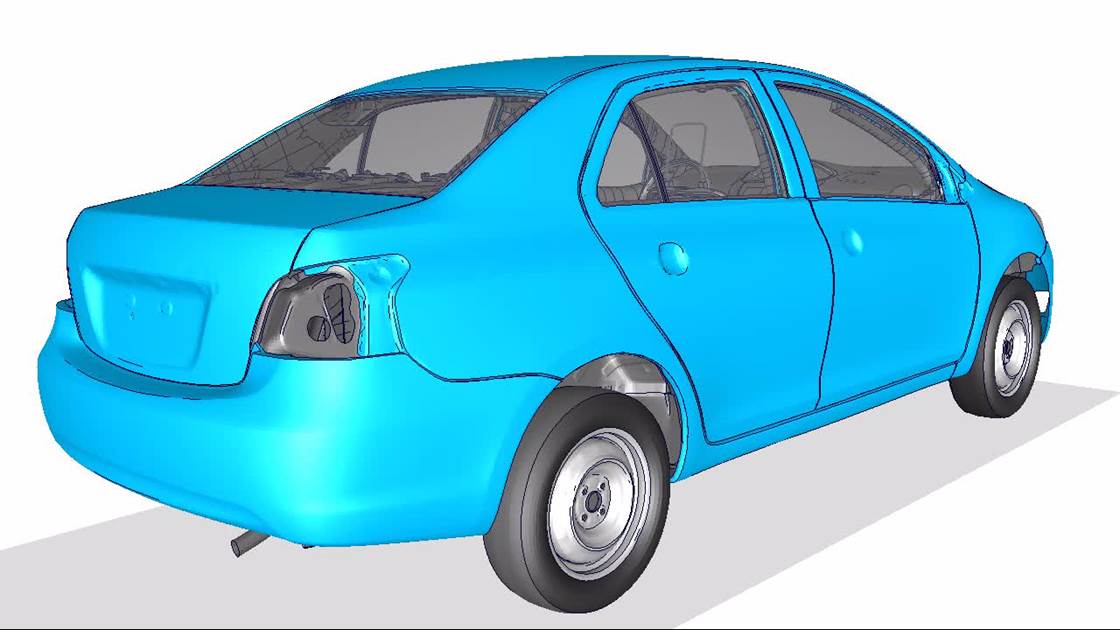
Yaris Dynamic Suspension System Loading
In this example we want to demonstrate the dynamic loading of the TOYOTA Yaris suspension system as an alternative approach to the static loading. The model is basically the same as the static suspension load, however this time it includes dynamic effects. This model was computed successfully with the LS-DYNA R9.0.1 MPP implicit solver. Again, we want to acknowledge the CCSA for the baseline model.
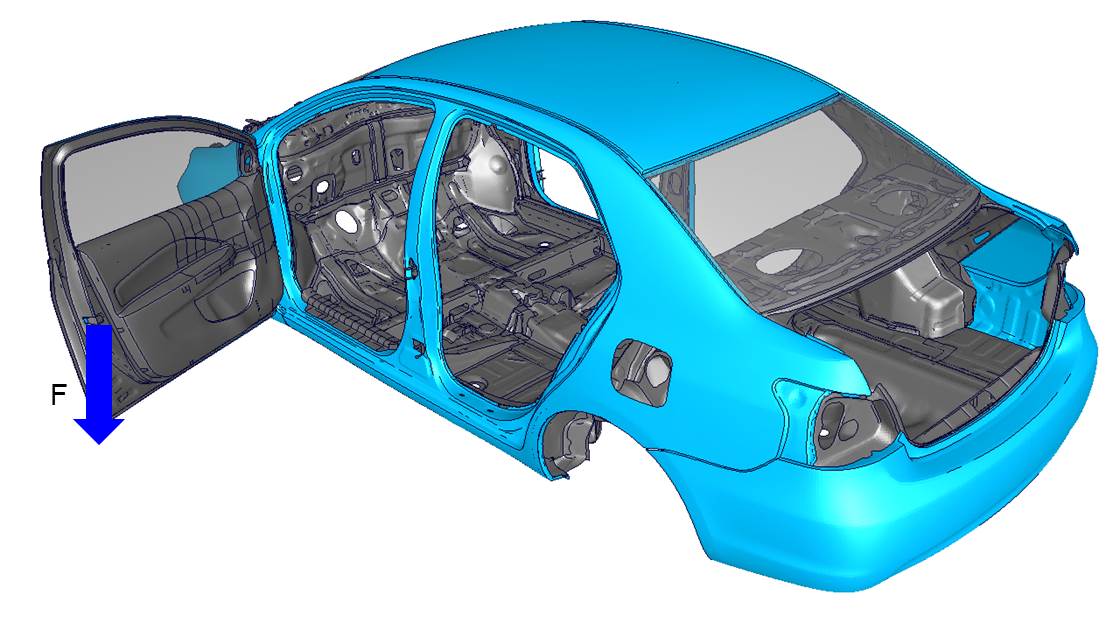
Yaris Static Door Sag
In the door sag load case a z-force is applied to the opened vehicle door in a quasi-static manner. The slow mode of loading and the small deformations that are expected here make this load case very suitable for the implicit solving scheme. The model has been derived form the static suspension loading model. This model was computed successfully with the LS-DYNA R9.0.1 MPP implicit solver. Again, we want to acknowledge the CCSA for the baseline model.
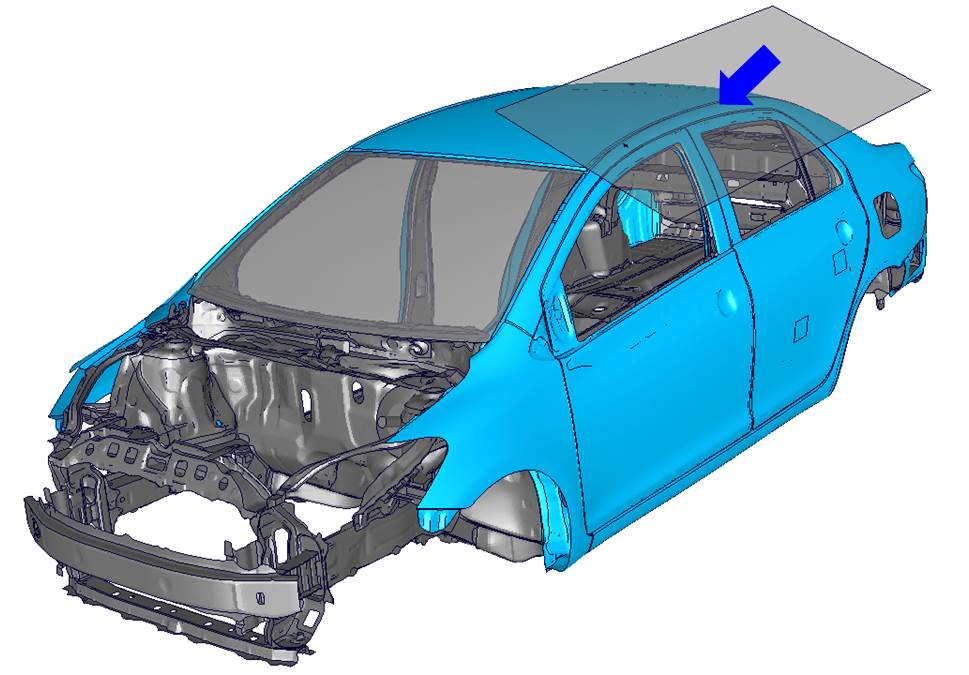
Yaris Dynamic Roof Crush
One of the tests used in occupant safety analysis is a roof crush test. It is used to evaluate how a car will deform during a rollover accident. A safer car does not deform as much providing the occupant a larger survival space during this kind of accident. In this test, a plate shaped impactor is pushed down on one side of the roof at constant (slow, quasi-static) speed. This load case challenges the solver because of large deformations, complex contact situations as well as local buckling. This model was computed successfully with the LS-DYNA R9.0.1 MPP implicit solver including dynamic effects. Last but not least, we want to acknowledge the CCSA for the baseline model.
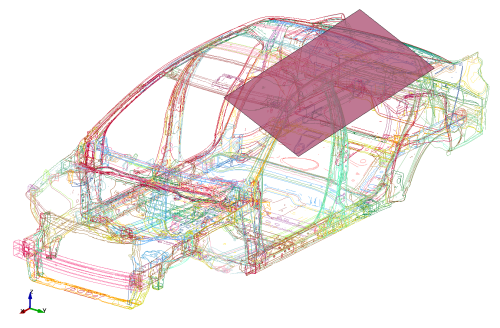
Implicit Roof Crush
This problem demonstrates the ability to solve a complex, highly dynamic and nonlinear problem using the implicit solver of LS-DYNA. The model runs robustly and can be used as a learning aid for setting up implicit problems. The original car model of the Toyota Camry was taken from the NCAC FE model database. Please use a recent developer version of LS-DYNA (i.e. ls-dyna_mpp_d_dev_109569 or later) to compute this example.
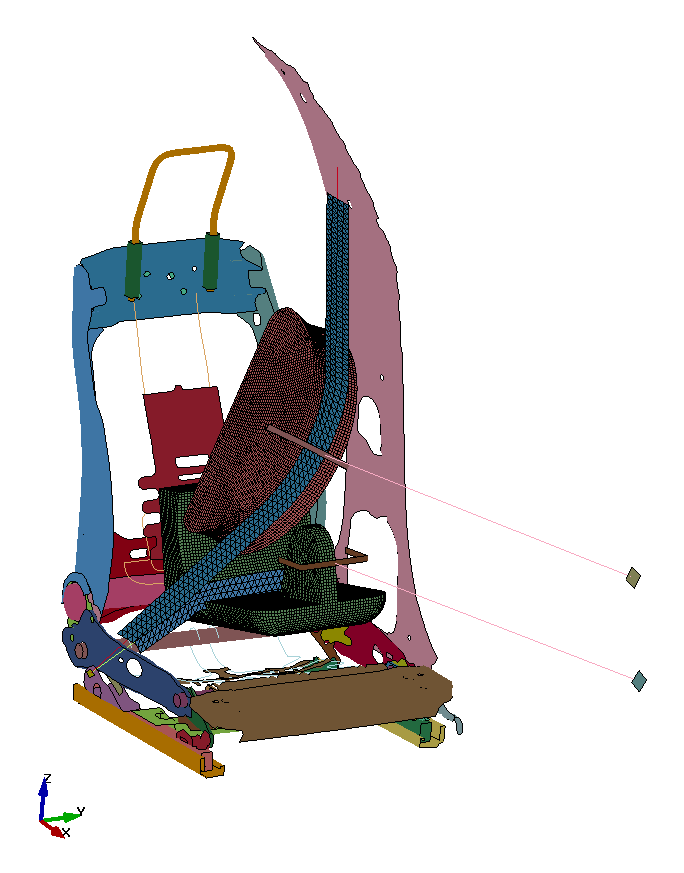
Implicit Seat Pull
This problem demonstrates the ability to solve a complex, highly dynamic and nonlinear problem using the implicit solver of LS-DYNA. The load case will help users to set up seat pull simulations and similar problems. Please use a recent developer version of LS-DYNA (i.e. ls-dyna_mpp_d_dev_109569 or later) to compute this example.
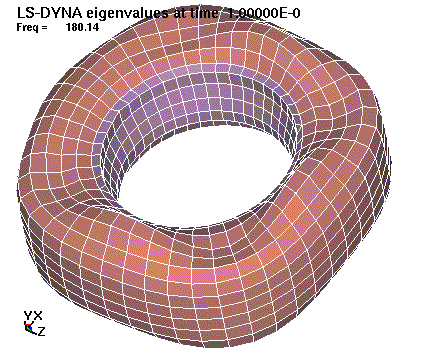
Basic Examples
Set of basic examples to demonstrate the implicit capabilities of LS-DYNA.