
Thermal
Thermal Stress
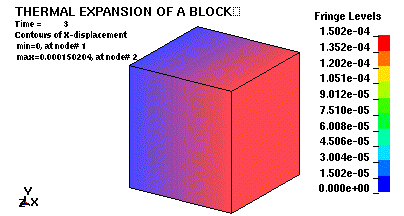
This problem demonstrates using LS-DYNA to solve for the unconstrained expansion of a block due to heating. The model consists of one 8 node brick element at an initial temperature of 10. The brick material is given a volumetric thermal generation rate. Explicit time integration is used for the structural calculations and implicit time integration is used for the thermal calculations. Implicit time integration is unconditionally stable and, therefore, a larger thermal time step can be taken.
Metal forming
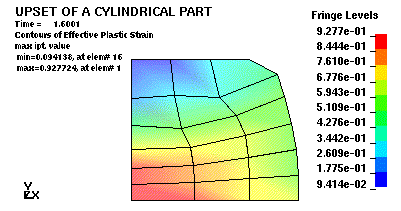
This problem models the metal forming process known as upsetting. Only a quarter of the problem is modeled because of symmetry. The initial temperature is 20. There is no heat transfer to the environment. The temperature change of the body is from conversion of mechanical work into heat through plastic deformation. A thermal time step is used which is 1000 times larger than the mechanical time step, since heat transfer takes place on a longer time scale than the mechanical deformation.
Thermal expansion
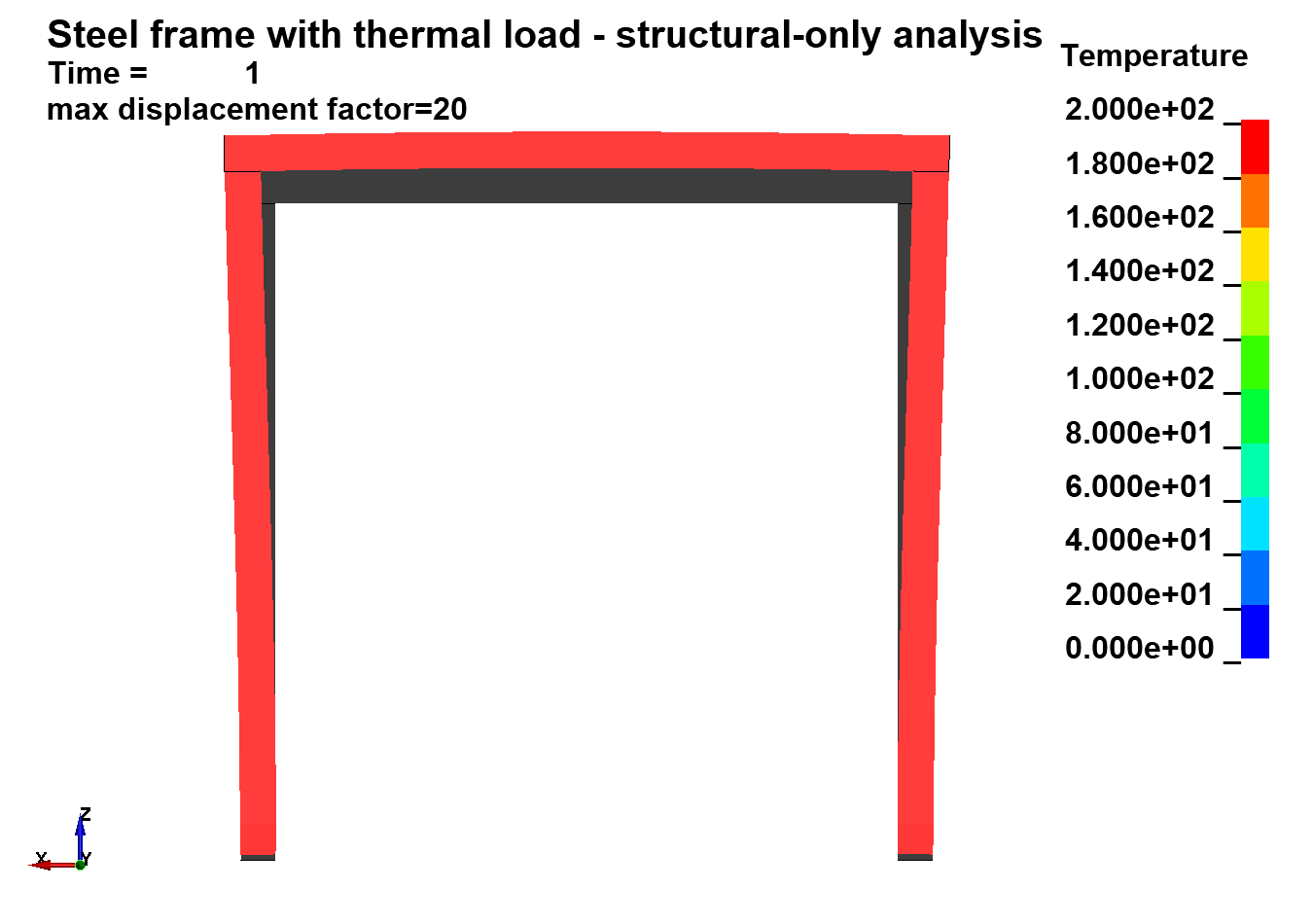
Examples on thermal expansion with structural-only and structure-thermal coupled approaches.
Heat transfer
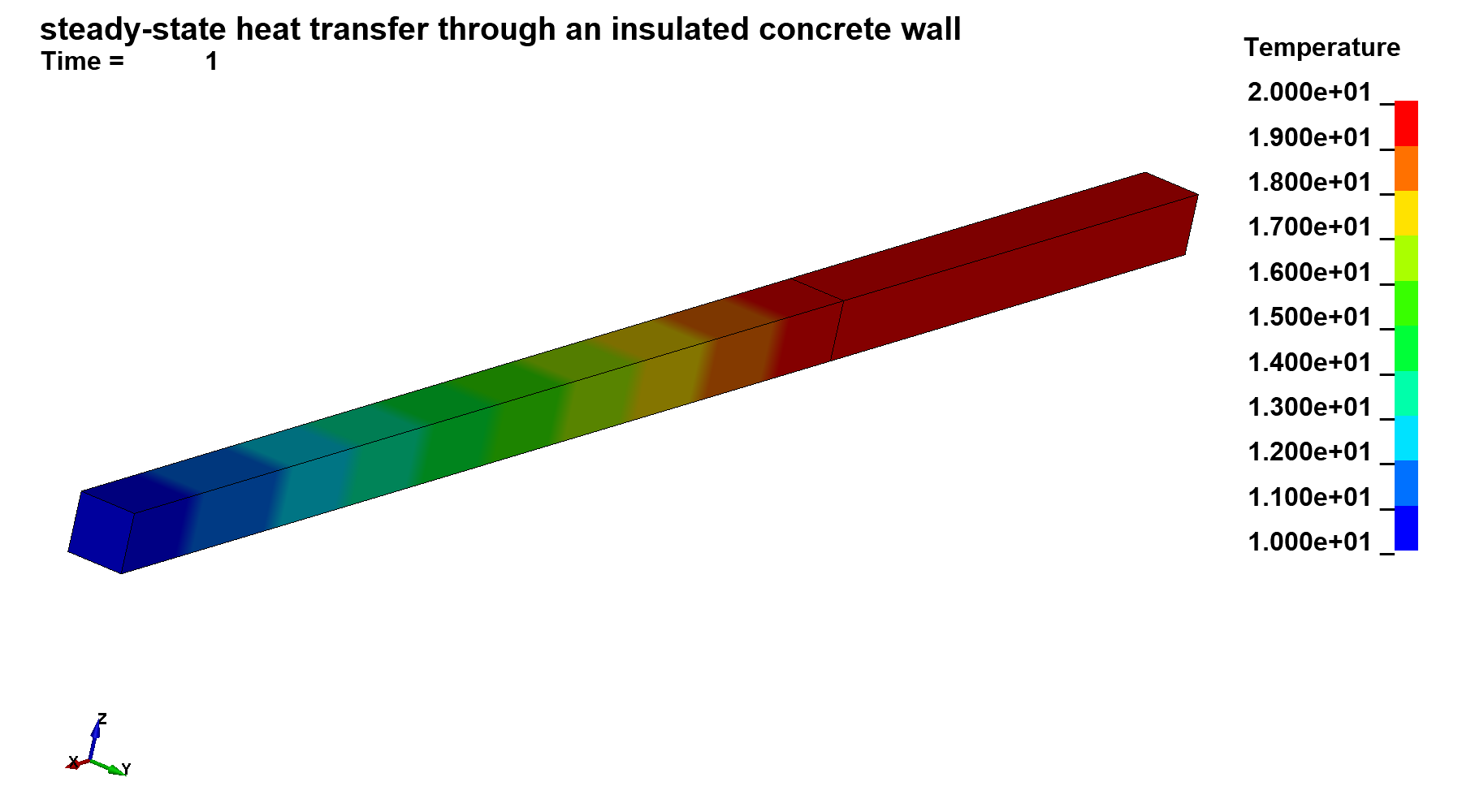
Examples on heat transfer with steady-state and transient analysis.
Radiation and convection
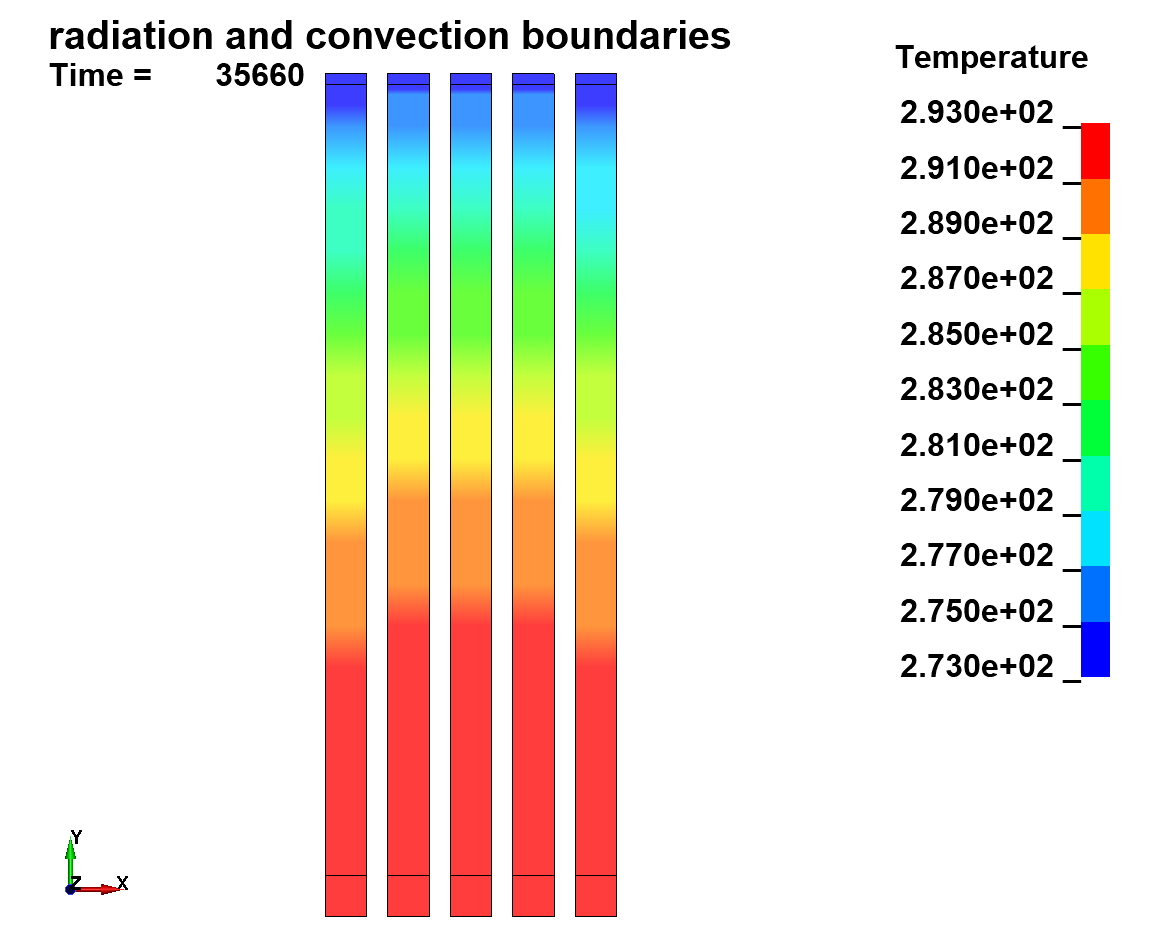
The basis for this example is a simple roof structure consisting of a wooden panel, insulation and an aluminium outer layer. The internal temperature on the wood surface is kept constant. The outside ambient temperature is also constant but lower than the inside temperature. Five different roof sections are used to demonstrate different definitions for convection and radiation boundary conditions on the surface of the aluminium layer. A transient thermal calculation is carried out.
Welding
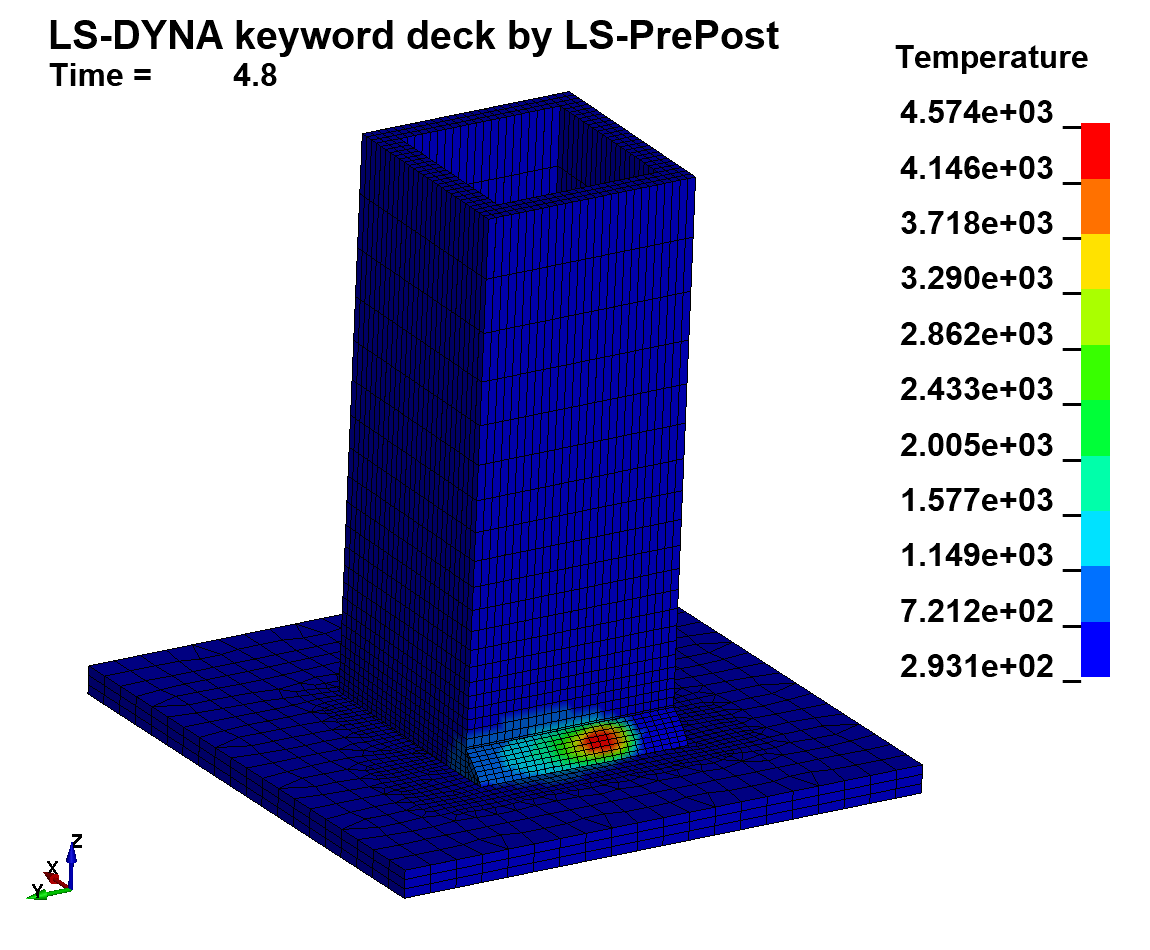
Coupled and uncoupled welding simulations with solids and shells. Uncoupled examples show mapping of temperatures from one process to another.
Thermal contact and heat flux
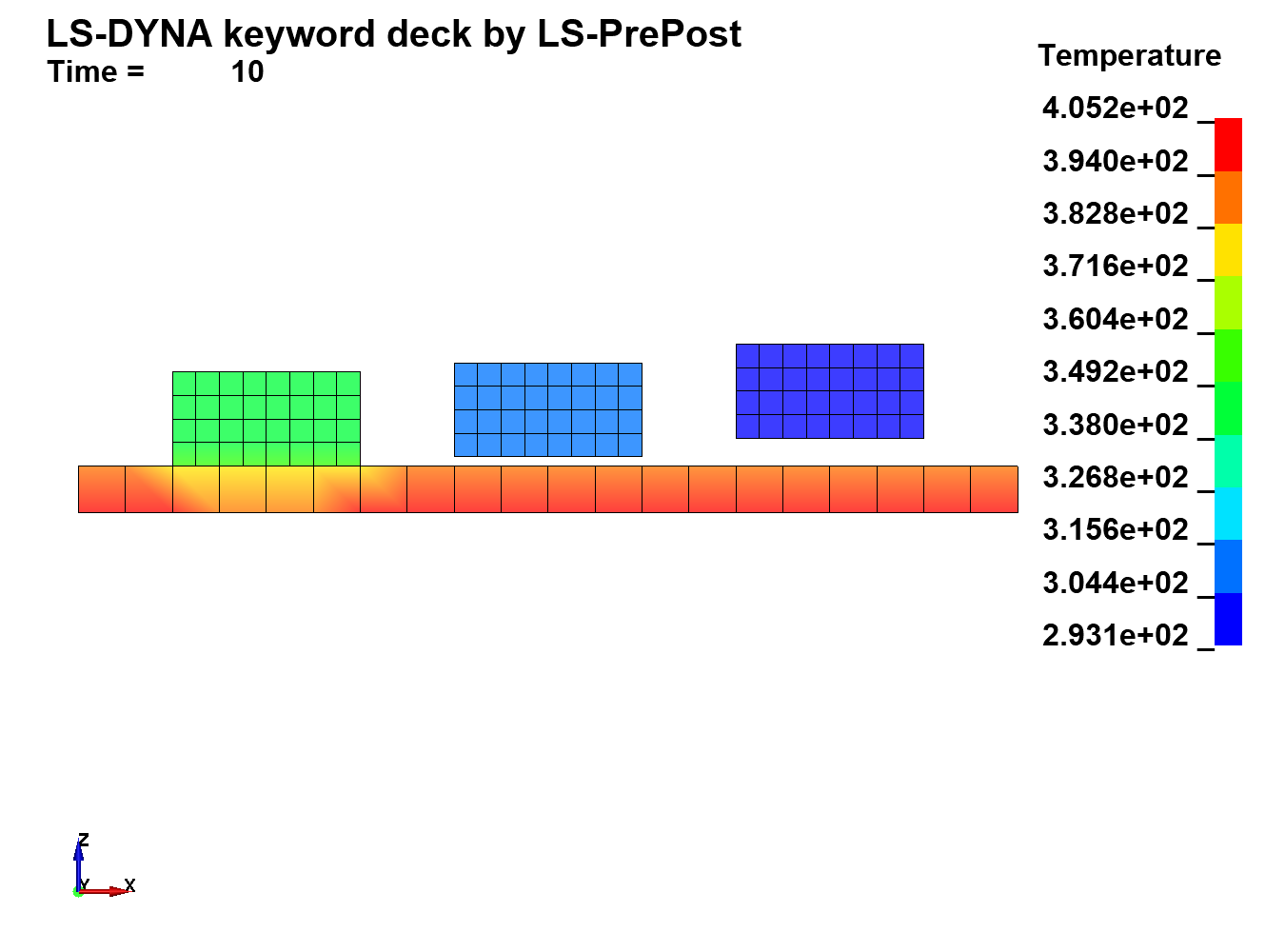
A heating plate is heated up through a heat flux. Parts on top of this plate can exchange heat via contacts. This is shown in this example. A component is in direct contact and exchanges heat via heat conductivity. Another component is very close to the heat source and exchanges heat via a simplified heat convection and radiation formulation. Another component is located outside the contact range and does not exchange heat.
Thermal thick and thin shells
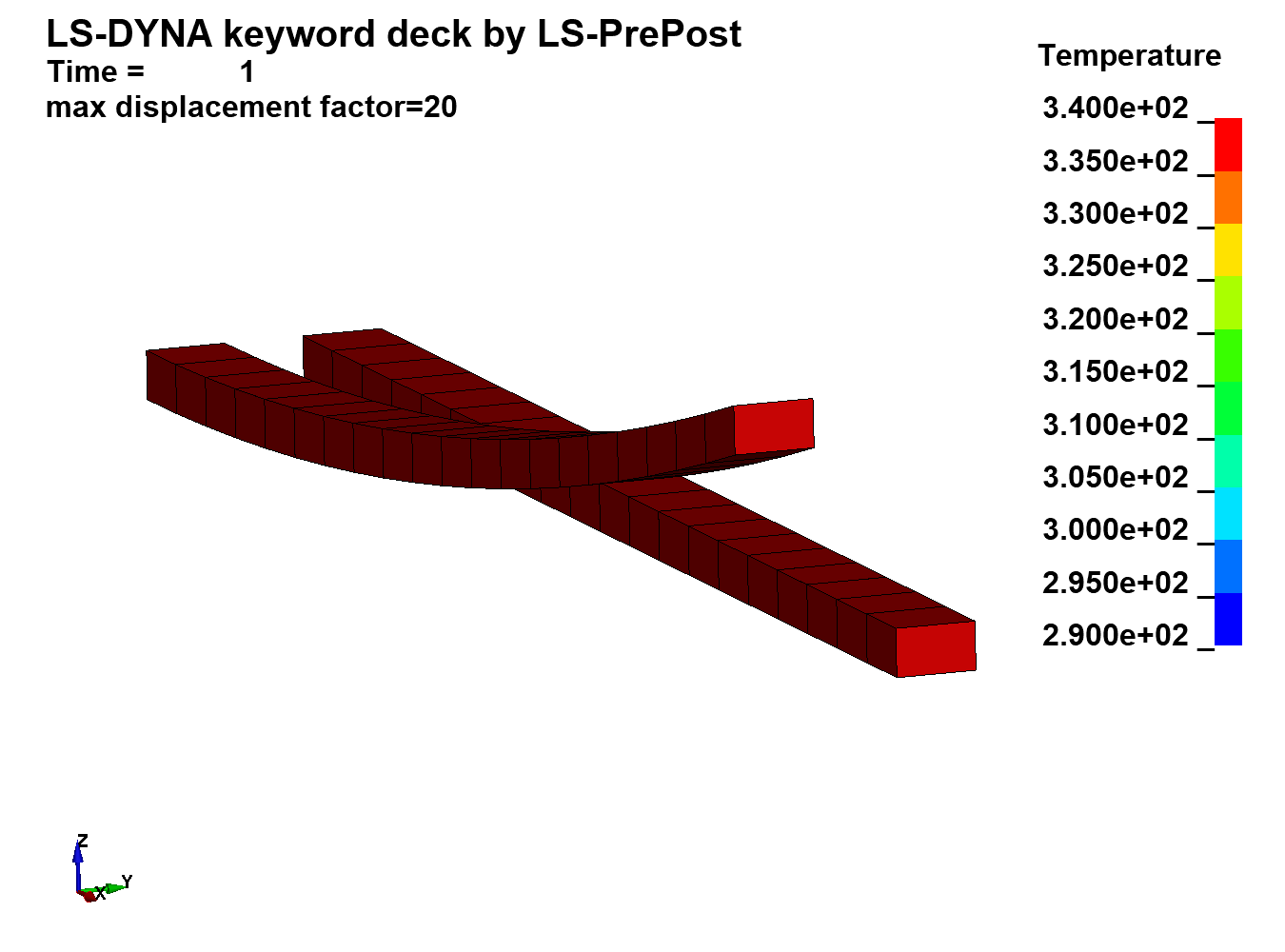
Two metalstrips are heated up by a heat flux, which is applied at the bottom surface of the elements. One metalstrip is assigned to an element section which defines a thermal thick shell, the other is assigned to a thermal thin shell. A coupled structural-thermal analysis is performed to demonstrate the difference in the behaviour of the thermal thin and the thermal thick shell. The thermally thin shell has a constant temperature field over its thickness and expands only in length. The thermally thick shell, on the other hand, can map a temperature gradient across thickness, with the metal strip curving as a result of the change in thermal expansion across thickness.